
You are about to swap a stablecoin on a familiar DeFi app. The wallet shows a token approval, then a second transaction for the swap. You check the amount, recognize the protocol, and click through. Minutes later, the trade has failed—or worse, an old approval has left more of your balance exposed than you intended. This is the practical problem behind multi-chain wallet transaction simulation and token approval management: the wallet is not merely storing keys. It is interpreting instructions across different networks, contracts, tokens, and fee systems before you authorize them.
For US-based DeFi users, that distinction matters because “confirm” is not the same as “safe.” A confirmation signs data; it does not guarantee that the transaction will succeed, behave as expected, or remain harmless if a contract is later compromised. A capable browser wallet can make the decision easier by explaining likely balance changes, flagging suspicious interactions, and showing approval scope. But those features are decision aids, not substitutes for understanding the transaction’s authority.
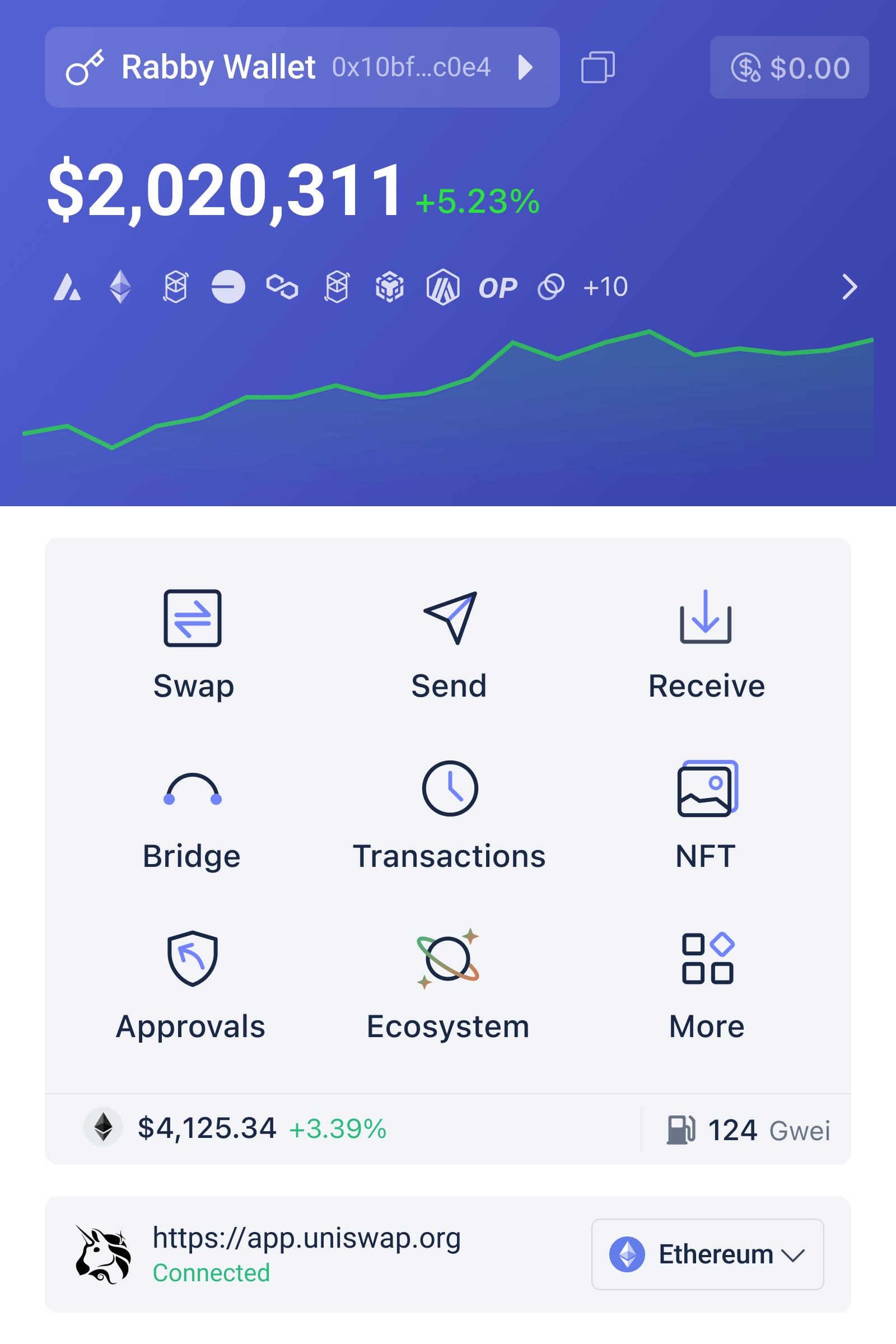
The hidden complexity of a multi-chain transaction
A multi-chain wallet often makes several networks feel like one account. That is convenient, but the underlying systems remain separate. Ethereum, layer-2 networks, and other compatible chains may use similar address formats while maintaining different balances, contract deployments, fee markets, bridge routes, and security assumptions. The same token symbol can even represent different contracts on different chains.
This is why a wallet’s transaction simulation is valuable. In broad terms, simulation executes the proposed call against a representation of the current blockchain state without broadcasting it as a finalized transaction. The wallet can then estimate what the call may do: which assets leave the account, which assets arrive, whether a contract call is likely to revert, and whether the interaction includes an approval or another permission change.
The important word is “may.” A simulation is a forecast based on a particular state, not a guarantee about the future. The blockchain can change between simulation and inclusion. A decentralized exchange price can move, liquidity can disappear, a block can reorder transactions, or a contract can depend on conditions the simulator cannot fully observe. Simulation improves visibility; it does not eliminate execution risk.
That limitation corrects a common misconception: a green simulation does not mean a transaction is economically good. It may indicate that the call is technically executable, while the quoted price is poor, the slippage tolerance is too wide, or the recipient contract is not the one you intended to use. Technical success and financial prudence are different questions.
What transaction simulation can—and cannot—tell you
Simulation is strongest when it answers concrete state-change questions. Will the wallet’s token balance decrease? Will the expected asset appear afterward? Is the transaction calling the contract named by the application? Does the request appear to grant spending permission? These are more useful questions than simply asking whether a transaction is “safe.”
For example, suppose a swap interface requests approval for 10,000 units of a stablecoin even though you intend to trade only 500. The swap itself might be ordinary, but the approval creates a separate capability: the approved spender may be able to move the permitted tokens later, according to the token’s allowance rules. A simulation or transaction preview that separates the approval from the swap gives the user a chance to notice that mismatch.
Simulation also helps with failed transactions. A revert prediction can save network fees and time, particularly on chains where users may submit several attempts with different gas settings. Yet failure prediction is imperfect. Some contracts behave differently depending on block timestamp, oracle updates, account state, or interactions that occur immediately before execution. A user should treat a warning as a reason to investigate, not as proof of maliciousness; likewise, a lack of warning should not be treated as a clean bill of health.
This is where installing the rabby wallet extension can be useful for readers who want transaction context at the point of signing. The practical value is not a badge of approval for every protocol. It is the ability to review proposed effects in the same browser workflow where the transaction is created, while still checking the application, network, recipient, and economic terms independently.
Token approvals are permissions, not payments
An ERC-20 token approval is often misunderstood as part of the payment itself. Mechanically, it is closer to granting a spending permission. The token contract records that a designated spender may transfer up to a specified amount from your address. The later swap, deposit, or liquidity action uses that permission through a transfer function.
That separation produces a distinctive risk. A transaction can fail after an approval succeeds. The approval can remain active even if you stop using the application. In some cases, an unlimited approval can cover future holdings of that token, not merely the amount currently in the wallet. If the spender’s contract is upgraded, compromised, or incorrectly identified, the retained permission may become relevant long after the original transaction is forgotten.
There is a trade-off here. Limited approvals reduce potential exposure, but they create more friction because users may need to approve again when they trade more. Unlimited approvals are convenient and can reduce the number of transactions, but they widen the consequences of a later problem. Neither choice is universally correct. The appropriate decision depends on the contract, the token, the user’s expected activity, and how actively the allowance will be monitored.
Approval management should therefore be treated as account hygiene. Review allowances periodically, especially after experimenting with unfamiliar applications, bridging assets, participating in token launches, or connecting to a site you no longer use. Revoking an approval is itself a blockchain transaction and may require network fees. It also does not undo transfers that already occurred; it prevents or limits future use of the permission.
Three approaches, three different compromises
The first approach is manual review with a basic wallet. The user checks the website domain, network, contract address, token amount, gas estimate, and approval request before signing. This offers maximum direct control and minimal dependence on wallet interpretation, but it demands technical attention at every step. It is easy to miss an allowance buried in a long sequence of interactions.
The second approach is a wallet with built-in simulation and risk-oriented transaction presentation. This reduces cognitive load by translating raw call data into expected asset changes and highlighting unusual permissions. It is often the best compromise for everyday DeFi, particularly when moving between several networks. Its weakness is interpretive dependence: the user must understand that labels and simulations are generated from available data and can be incomplete or wrong in edge cases.
The third approach is specialized approval tracking or portfolio-security tooling. These services can provide a broader view of allowances across accounts and chains, which is useful for active users with many old positions. The cost may include extra setup, additional browser permissions, privacy considerations, and another interface to maintain. They complement transaction simulation rather than replace it, because a historical allowance list does not explain every new transaction at signing time.
A hardware wallet adds another layer, protecting private-key operations from many browser-based threats. But it does not solve the interpretation problem by itself. A hardware device can securely sign a transaction that the user has misunderstood. Security is layered: key protection, application authenticity, transaction interpretation, contract judgment, and approval management address different failure modes.
A reusable review framework before signing
Before confirming a multi-chain transaction, ask four questions. First, where am I? Verify the network, because an identical address format does not mean identical balances or contracts. Second, what changes? Read the expected assets sent and received, including the possibility that the transaction is only an approval. Third, who receives authority? Identify the spender, recipient, or contract that gains permission. Fourth, what happens if the transaction fails or the market moves? Check slippage, deadlines, gas, and whether a failed attempt could still leave an approval behind.
This framework is deliberately more demanding than looking for a green warning indicator. It separates identity, state change, authority, and economic exposure. That separation is the sharper mental model: every DeFi transaction should be read both as an action and as a change in permissions.
Small operational habits compound. Keep meaningful funds separated from experimental activity when practical. Use a dedicated browser profile for wallet-connected applications. Confirm the official application domain through a trusted path rather than a sponsored search result. Avoid signing blind messages. After a one-time interaction, consider whether the approval should remain. For high-value transactions, compare the wallet preview with the application’s stated terms and, where possible, inspect the contract interaction through an independent source.
What to watch as wallets become more predictive
The likely direction of wallet design is not simply more warnings. It is better translation: showing users how a transaction changes balances, permissions, and exposure across chains in a single view. That could make DeFi more accessible, but it also creates a new governance question: which interpretation should users trust when an application, wallet, token list, and security service disagree?
The strongest systems will probably combine simulation with clear uncertainty. A useful wallet should distinguish “the call is expected to revert” from “the contract has a known risk signal,” and both from “the transaction appears technically normal but cannot be independently verified.” If future tools hide those distinctions behind a single score, convenience may increase while understanding declines.
For now, the practical conclusion is modest but powerful. Use simulation to inspect consequences, use approval controls to limit authority, and treat every chain switch as a new context rather than a cosmetic change. The wallet can surface evidence; the signer still owns the decision.
Frequently Asked Questions
Does transaction simulation guarantee that my DeFi transaction is safe?
No. It estimates likely execution and asset changes using available blockchain state. It can miss rapidly changing prices, ordering effects, hidden contract behavior, or risks that are economic rather than technical. Use it as a review layer, not a guarantee.
Should I always revoke unlimited token approvals?
Not necessarily, but unused or unfamiliar unlimited approvals deserve attention. Revocation reduces future spending authority, while limited approvals reduce exposure from the start. The trade-off is additional transactions, fees, and friction when you interact with the application again.
Why should I review the network when the wallet address looks the same?
Compatible chains can share address formats while holding different balances and deploying different contract versions. A transaction sent on the wrong network can behave differently, fail, or involve an asset that is not the one you intended to use.